
Introduction
Blogging Tips for Beginners in 2026: A Complete Guide to Getting Started,Blogging in 2026 is more exciting—and more competitive—than ever before. With millions of blogs already online, starting your own may feel overwhelming. However, the good news is that there is still plenty of room for new voices, fresh ideas, and helpful content.
Whether you want to share your knowledge, build a personal brand, or create an online income stream, blogging remains one of the most accessible ways to get started online. The key is to approach it with the right strategy, patience, and understanding of what readers and search engines value today.
This guide will walk you through practical, beginner-friendly blogging tips to help you build a strong foundation and grow your blog successfully in 2026.
Understanding What Blogging Means Today
Blogging is no longer just about writing personal diaries online. In 2026, it has evolved into a powerful platform for education, storytelling, and problem-solving.
The Purpose of a Blog
A successful blog typically focuses on helping readers by:
- Answering questions
- Solving problems
- Providing clear and useful information
- Sharing real experiences or insights
Search engines now prioritize helpful, people-first content, so your main goal should always be to provide value.
Types of Blogs You Can Start
As a beginner, you can choose from several types of blogs:
- Educational blogs (how-to guides, tutorials)
- Lifestyle blogs (daily life, hobbies, routines)
- Niche blogs (focused topics like fitness, finance, or travel)
- Review blogs (products, tools, services)
Choosing the right type depends on your interests and long-term goals.
Choosing the Right Niche
One of the most important decisions you will make is selecting your niche.
What Is a Niche?
A niche is the main topic or focus of your blog. Instead of writing about everything, you focus on a specific subject.
Examples include:
- Budget travel
- Home workouts
- Personal finance for beginners
- Healthy recipes
How to Pick a Good Niche
When choosing a niche, consider three things:
- Interest – Do you enjoy the topic?
- Knowledge – Can you provide helpful information?
- Demand – Are people searching for this topic?
A good niche sits at the intersection of these three factors.
Setting Up Your Blog
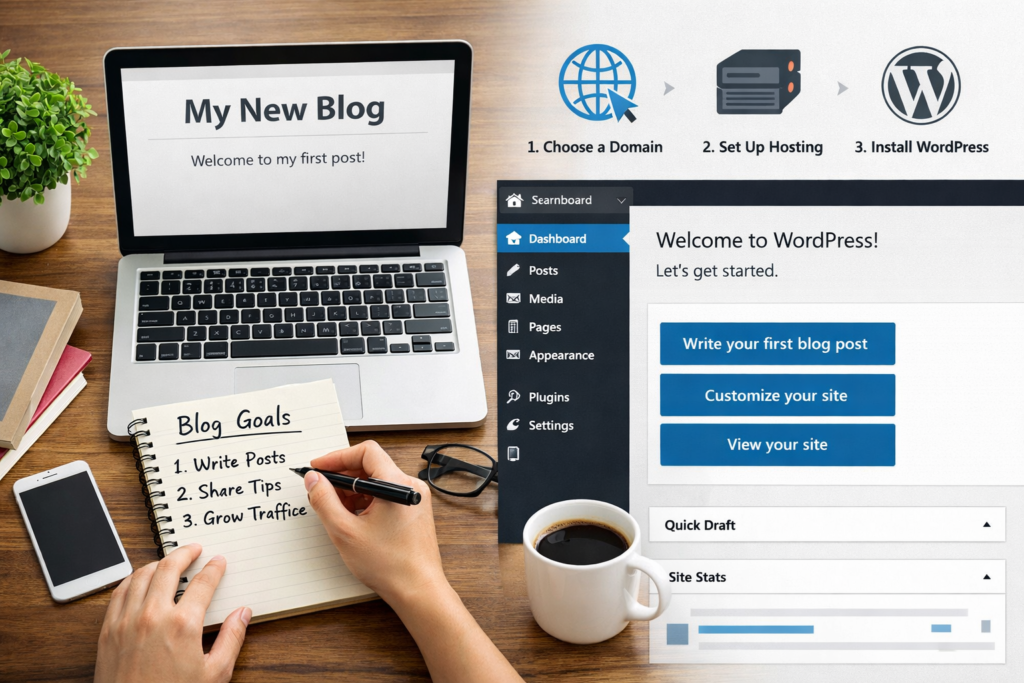
Getting your blog online is easier than ever, especially with platforms like WordPress.
Steps to Launch Your Blog
- Choose a domain name (your website name)
- Get reliable hosting
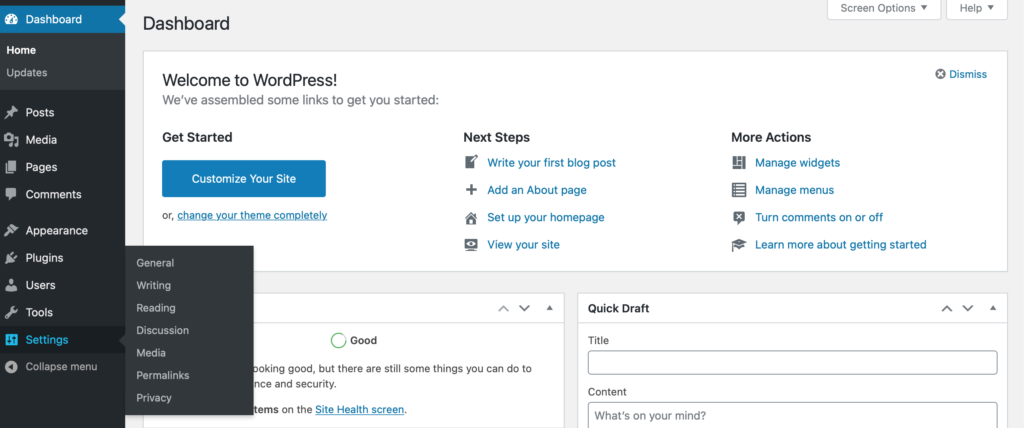
- Install WordPress
- Select a clean and simple theme
- Customize basic settings
You don’t need advanced technical skills to get started. Many hosting providers offer one-click WordPress installation.
Keep It Simple at First
Avoid spending too much time on design in the beginning. Focus on:
- Readable fonts
- Simple layout
- Easy navigation
Content matters far more than appearance when you are starting out.
Writing High-Quality Content
Content is the heart of your blog. Without valuable content, it’s difficult to attract readers or rank in search engines.
Focus on Helping the Reader
Before writing any article, ask yourself:
- What problem does this solve?
- What will the reader learn?
Your content should always have a clear purpose.
Use Clear and Simple Language
Write as if you are explaining something to a friend. Avoid:
- Complex jargon
- Long, confusing sentences
- Unnecessary filler words
Structure Your Articles Properly
A well-structured article improves readability and SEO.
Use:
- Short paragraphs
- Headings (H2, H3)
- Bullet points
- Clear sections
Understanding Basic SEO (Search Engine Optimization)
SEO helps your blog appear in search engine results. While it may sound complicated, beginners only need to understand the basics.
Keyword Research
Keywords are the words people type into search engines.
For example:
- “blogging tips for beginners”
- “how to start a blog in 2026”
Choose one main keyword per article and use it naturally.
On-Page SEO Basics
Make sure to:
- Include your keyword in the title
- Use it in headings
- Add it naturally throughout the article
- Write a clear meta description
Avoid overusing keywords—this can harm your ranking.
Write for Humans First
Search engines are smarter now. They reward content that is:
- Helpful
- Clear
- Trustworthy
Always prioritize the reader over algorithms.
Consistency Is More Important Than Frequency
Many beginners think they need to publish every day. That’s not true.
Create a Realistic Schedule
Instead of posting daily, aim for:
- 1–2 high-quality posts per week
- Or even 2–4 posts per month
Consistency builds trust with both readers and search engines.
Focus on Quality Over Quantity
One well-written article is more valuable than five rushed ones.
Building Trust and Credibility
Trust is essential for long-term blogging success.
Be Honest and Transparent
Avoid:
- Exaggerated claims
- Misleading titles
- Clickbait
Instead, focus on accuracy and clarity.
Show Experience When Possible
If you are writing about a topic:
- Share personal experience
- Provide real examples
- Explain step-by-step processes
This makes your content more reliable.
Making Your Blog AdSense-Friendly
If you plan to monetize your blog using Google AdSense, you must follow certain guidelines.
Important Requirements
Your blog should have:
- Original content
- Clear navigation
- Privacy Policy page
- About page
- Contact page
Avoid Restricted Content
Do not publish content related to:
- Adult topics
- Illegal activities
- Harmful or dangerous advice
Keeping your blog safe and informative increases your chances of approval.
Improving User Experience
User experience (UX) plays a major role in blog success.
Make Your Blog Easy to Read
Use:
- Large, readable fonts
- Good spacing
- Simple colors
Optimize for Mobile Devices
Most users browse on smartphones. Ensure your blog:
- Loads quickly
- Looks good on mobile
- Is easy to navigate
4
Promoting Your Blog
Writing great content is only part of the process. You also need to promote it.
Share on Social Media
Platforms like:
- Twitter (X)
can help you reach more people.
Join Online Communities
Participate in:
- Forums
- Facebook groups
- Reddit discussions
Provide value, not spam.
Build an Email List
Even as a beginner, consider collecting emails. This helps you:
- Stay connected with readers
- Share new posts
- Build long-term traffic
Tracking Your Progress
Understanding what works helps you grow faster.
Use Analytics Tools
Track:
- Number of visitors
- Popular posts
- Traffic sources
This helps you focus on what your audience likes.
Learn and Improve
Blogging is a continuous learning process. Over time, you will:
- Write better content
- Understand your audience
- Improve your strategy
Common Mistakes Beginners Should Avoid
Avoiding common mistakes can save you time and frustration.
1. Expecting Quick Results
Blogging takes time. Most successful blogs grow over months or years, not weeks.
2. Copying Other Content
Always write original content. Copying can harm your reputation and SEO.
3. Ignoring SEO Completely
Even basic SEO knowledge can make a big difference.
4. Giving Up Too Early
Consistency is key. Many beginners quit before seeing results.
Future Trends in Blogging (2026 and Beyond)
Understanding trends can help you stay ahead.
Helpful Content Will Continue to Dominate
Search engines prioritize content that genuinely helps users.
AI Tools Will Assist, Not Replace
AI can help with ideas and editing, but human insight and authenticity remain essential.
Personal Branding Matters More
Readers connect with real people, not just information. Adding your voice and perspective makes your blog stand out.
Conclusion
Starting a blog in 2026 is still one of the best ways to share knowledge, build an online presence, and create opportunities. While the competition is higher, so are the tools and resources available to help you succeed.
Focus on creating helpful, well-structured, and original content. Choose a niche you care about, stay consistent, and keep learning as you grow. Success in blogging doesn’t happen overnight, but with patience and effort, it is absolutely achievable.
If you start today and stay committed, your blog can grow into something meaningful—not just for you, but for your readers as well.