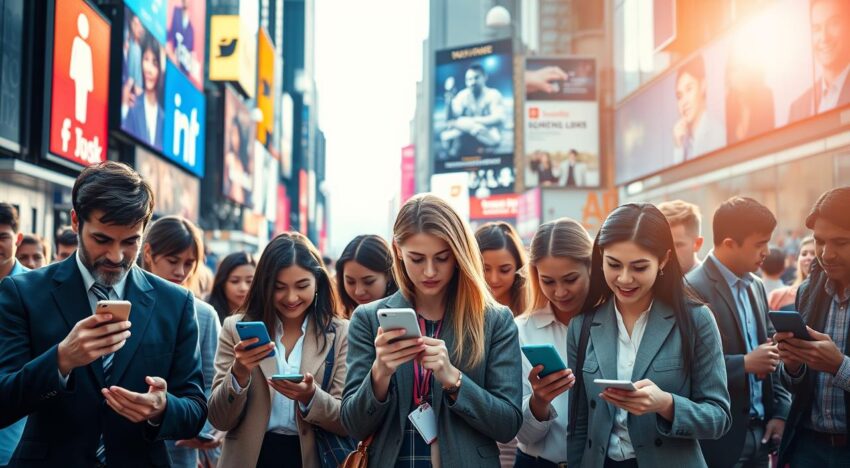
How Social Media Affects Society-Digital platforms have changed how we talk, share info, and see the world. It’s key to understand how social media affects society in today’s connected world.
These tools have changed how we interact, opening doors for global teamwork but also bringing big challenges. The profound social media impact shows up in politics and our mental health.
As we use these technologies more, it’s important to think about their long-term effects. By looking at these digital trends, we can see changes in our communities and personal lives.
Key Takeaways
- Digital platforms have revolutionised global communication and information sharing.
- The influence of these networks extends to political, cultural, and personal spheres.
- Users must recognise the balance between connectivity and possible mental health risks.
- Analysing digital trends helps individuals navigate the modern landscape more effectively.
- Ongoing observation is necessary to understand the evolving nature of our online interactions.
The Evolution of Digital Communication and How Social Media Affects Society
Social media has changed how we talk and share info. It affects many parts of society, like personal relationships and global news.
Shifting Paradigms in Human Interaction
Social media has changed how we communicate. Sites like Facebook, Twitter, and Instagram are now part of our daily lives. The societal influence of social platforms shows in how they’ve changed old ways of talking, making it easy to connect anywhere.
But, there are downsides. Online talk has made us talk less face-to-face, which can hurt deep friendships. Also, social media’s perfect images can make us feel like we’re not good enough and push us to buy more.
The Speed and Reach of Global Information Exchange
The online community effects of social media are big in sharing news worldwide. These platforms are key for spreading news fast around the world.
This fast sharing has both good and bad sides. It helps us connect and know what’s happening globally, which is great for social causes. But, it can also spread false news and make people more divided.
| Aspect | Positive Impact | Negative Impact |
|---|---|---|
| Global Information Exchange | Facilitates global connectivity and awareness | Can lead to the spread of misinformation |
| Human Interaction | Enables instant connectivity across geographical boundaries | May decline face-to-face interactions and deepen social isolation |
Psychological Implications and Mental Health Challenges
Social media has many effects on our minds. As we spend more time online, worries about our mental health grow.
The Correlation Between Screen Time and Anxiety
Studies show a link between too much screen time and anxiety. The endless flow of news and the need to stay connected can feel overwhelming.
Algorithmic personalisation also adds to anxiety. It shows us content that gets a strong reaction, making our online world both engaging and stressful.
The Role of Algorithmic Feedback Loops
Algorithmic feedback loops are how social media shapes what we see. It creates a cycle that can make us see more of what worries us.
For example, if you often look at health news, you’ll see more of it. This can make your anxiety worse.
Body Image and the Culture of Comparison
Social media shows us the best parts of others’ lives. This can make us feel bad about ourselves, which is hard for young people.
Impact on Adolescent Self-Esteem
Young people are very sensitive to social media. Seeing perfect images and comparing ourselves can hurt our self-image and confidence.
| Age Group | Common Social Media Concerns | Potential Impact |
|---|---|---|
| 13-15 years | Body image concerns, cyberbullying | Decreased self-esteem, anxiety |
| 16-18 years | Social comparison, online harassment | Increased stress, mental health issues |
| 19-21 years | Unrealistic expectations, FOMO (Fear of Missing Out) | Anxiety, depression |
It’s important to understand how social media affects our minds. By being aware of the risks and managing our use, we can protect our mental health.
Transforming Social Dynamics and Community Engagement
Social media has changed how we connect with each other. It has reshaped our social lives, from how we talk to each other to how we join social movements.
The Rise of Digital Activism and Social Movements
Social media has made digital activism possible. It lets people and groups support causes worldwide. Hashtag campaigns and online petitions are now key for awareness and change.
For example, #BlackLivesMatter and #MeToo have used social media. They have shared stories, gathered support, and called for justice.
Digital activism has many benefits:
- It makes social causes more visible
- It helps mobilise support quickly
- It gives a voice to those who are often ignored
But, it also has challenges:
- Keeping online movements going
- The risk of slacktivism, where online support doesn’t lead to action

Echo Chambers and the Polarisation of Public Discourse
Social media algorithms can create echo chambers. These are spaces where people mostly see content that agrees with them. This can make public discussions more divided, as people see fewer opposing views.
The Challenge of Misinformation in Modern Networks
Misinformation is a big problem in echo chambers. False information can spread fast online, making it harder to solve social issues.
To fight misinformation, we need to:
- Teach people to be media savvy
- Use fact-checking tools
- Get platforms to stop spreading false info
Redefining Professional Networking and Workplace Culture
Social media has changed how we network and work. Sites like LinkedIn help professionals connect and share. But, it’s harder to keep our personal and work lives separate.
This change affects work culture in many ways:
- It offers new ways to learn and network
- It changes how companies talk to employees and customers
- It raises privacy and monitoring concerns
Economic Consequences and the Digital Marketplace
Social media is changing the economy in big ways. It’s affecting many areas, like how we shop and our privacy online.
Influencer Culture and Consumer Behaviour
Influencer culture has changed how we buy things. Influencers, with lots of followers, help brands get noticed. They share products and services, making it hard to tell what’s real and what’s paid for.
This has created a huge industry. Brands spend a lot on influencer marketing. It works well, boosting brand awareness and sales.
| Influencer Type | Follower Count | Average Engagement Rate |
|---|---|---|
| Nano-Influencer | 1,000 – 10,000 | 8% |
| Micro-Influencer | 10,000 – 100,000 | 5% |
| Macro-Influencer | 100,000 – 1,000,000 | 3% |
Data Privacy and the Commodification of Personal Information
Using our data for ads is a big business. But it raises big questions about data privacy and personal information being sold.
When we join social media, we agree to share our data. This info helps advertisers make detailed profiles. It’s led to calls for better data protection laws.

Social media’s impact is wide, affecting how we shop, our privacy, and the online market. As it keeps changing, it’s key for businesses, governments, and users to understand these effects.
Conclusion
Social media has a big impact on society, touching many areas of life. It has changed how we talk to each other, making it faster and wider. This is a big change in how we share information globally.
It’s important to understand how social media affects us. This includes how it can make us anxious and how it changes how we see ourselves. It also affects our mental health and how we compare ourselves to others.
Social media has also changed how we connect and join together. It has helped start new movements and conversations. But, it can also make us stuck in our views and separate us from others.
There are also big economic effects from social media. It has changed how we buy things and how companies market to us. There are worries about our privacy and how our personal info is used.
As social media keeps growing, we need to understand its big impact. We must find ways to use it for good and reduce its bad effects. This will help make society better for everyone.
FAQ
Precisely how social media affects society in terms of daily communication?
Social media has changed how we talk to each other. Sites like WhatsApp and X (formerly Twitter) make sharing news easy. But, they often focus on quick, easy interactions over deep talks.This can change how we see and understand news. It’s a big change in how society talks and shares information.
What are the most common social networking consequences for mental health?
Studies show too much screen time can make people anxious and depressed. On Instagram and TikTok, seeing others’ perfect lives can hurt self-esteem. This is because people compare themselves to others’ idealised lives.Also, how these sites work can make people keep using them. This can lead to bad habits.
How does technology’s impact on communities facilitate digital activism?
Social media is a strong tool for change. Movements like the Climate Strike and Black Lives Matter used Facebook and Instagram to reach millions. This shows how the internet can help bring people together for big changes.
In what ways do echo chambers contribute to the polarisation of public discourse?
Echo chambers are a big problem. They make people only see views that agree with theirs. Sites like YouTube and Facebook show content that gets a reaction, making things worse.This makes it hard to have balanced talks. It also spreads false information.
How has the digital marketplace changed consumer behaviour and data privacy?
Social media has changed how we shop. Influencers on LinkedIn or Instagram can influence what we buy. This has made our personal info valuable for ads.This raises big questions about privacy and the ethics of using our data for ads.
What is the overall internet influence on society regarding professional networking?
Social media has changed work. Sites like LinkedIn have made finding jobs easier. They connect people worldwide, opening up more job chances.But, it also makes work and personal life blend together. This creates a culture where we’re always “on” at work.