
Introduction
Best Study Techniques for Students, Studying is a key part of every student’s journey, yet many struggle to find methods that truly work for them.
spend long hours reading textbooks without seeing results, while others feel overwhelmed by the amount of information they need to remember. The truth is, effective studying is not about how long you study—it’s about how well you study.
This guide explores proven study techniques that can help students improve understanding, retain information longer, and perform better in exams. Whether you are in school, college, or learning independently, these methods will help you build stronger study habits and achieve your academic goals.
Understanding How Learning Works
Before diving into techniques, it’s important to understand how learning happens. Your brain processes information in stages: encoding (taking in information), storage (keeping it), and retrieval (recalling it later). Effective study methods strengthen all three stages.
Why Traditional Studying Often Fails
Many students rely on passive techniques such as rereading notes or highlighting textbooks. While these methods may feel productive, they often don’t engage the brain deeply enough to support long-term memory.
Active learning, on the other hand, requires thinking, questioning, and applying knowledge—making it far more effective.
Active Recall: The Most Powerful Study Technique
Active recall is one of the most effective ways to learn. It involves testing yourself on the material instead of simply reviewing it.
How to Use Active Recall
- Close your book and try to explain the topic from memory
- Use flashcards to test key concepts
- Write down everything you remember about a subject
- Practice answering questions without looking at notes
Why It Works
Active recall forces your brain to retrieve information, strengthening memory connections. This makes it easier to remember the same information during exams.
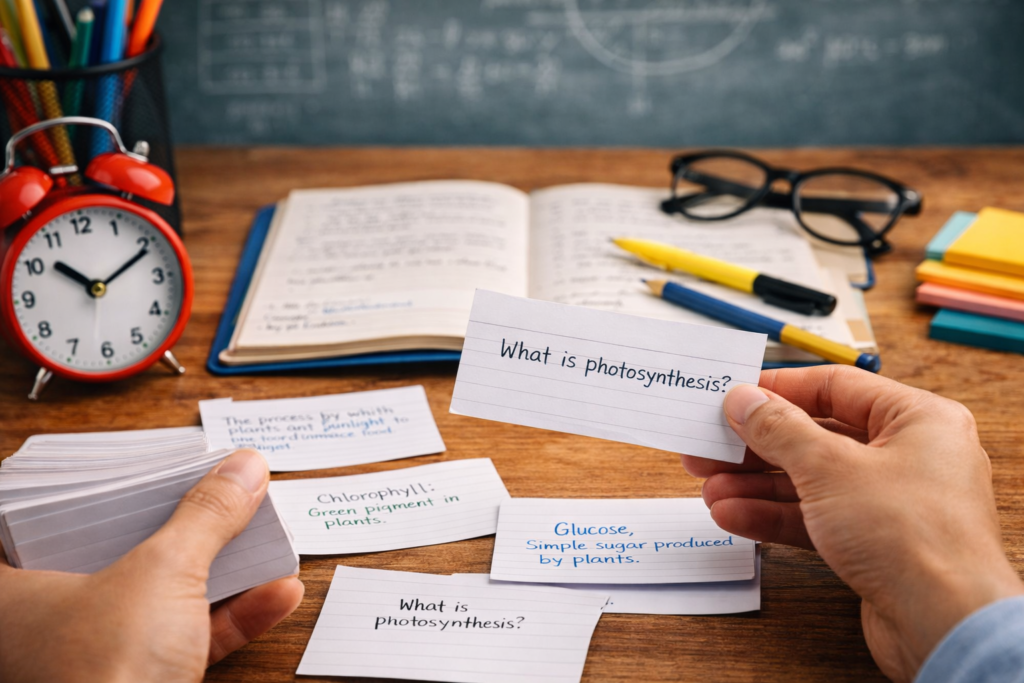
Suggested Image Placement: Insert your flashcards study image here (1000 x 675)
Spaced Repetition: Study Smarter Over Time
Spaced repetition involves reviewing information at increasing intervals over time instead of cramming everything at once.
How to Apply Spaced Repetition
- Review new material within 24 hours
- Revisit it after a few days
- Review again after a week
- Continue spacing out revisions over time
Benefits of Spaced Learning
- Improves long-term retention
- Reduces forgetting
- Makes studying less stressful
This method is especially useful for subjects that require memorization, such as languages, science terms, or historical facts.
The Pomodoro Technique: Boosting Focus and Productivity
The Pomodoro Technique helps students stay focused and avoid burnout by breaking study time into short sessions.
How It Works
- Study for 25 minutes
- Take a 5-minute break
- Repeat this cycle four times
- Take a longer break (15–30 minutes)
Why It Helps
Short study sessions keep your mind fresh and focused. Regular breaks prevent fatigue and improve concentration.
Suggested Image Placement: Add a timer or study desk image here
Creating an Effective Study Environment
Your surroundings can have a big impact on your ability to concentrate.
Key Elements of a Good Study Space
- Quiet and free from distractions
- Good lighting
- Comfortable seating
- Organized materials
Minimizing Distractions
- Turn off unnecessary notifications
- Keep your phone away or use focus apps
- Inform others that you are studying
A clean and organized space helps your brain stay focused and productive.
The Feynman Technique: Learn by Teaching
The Feynman Technique is a simple yet powerful method that involves explaining concepts in your own words.
Steps to Use the Feynman Technique
- Choose a topic
- Explain it as if teaching a beginner
- Identify gaps in your understanding
- Review and simplify your explanation
Why It Works
Teaching forces you to understand a concept deeply rather than memorizing it. If you can explain something clearly, you truly understand it.
Taking Effective Notes
Good note-taking helps you process and organize information better.
Popular Note-Taking Methods
The Cornell Method
- Divide your page into sections
- Write notes on one side
- Add key points and summaries
Mind Mapping
- Use diagrams to connect ideas
- Ideal for visual learners
Outline Method
- Organize information in bullet points
- Useful for structured topics
Tips for Better Notes
- Use your own words
- Highlight key ideas only
- Keep notes clear and concise
Suggested Image Placement: Insert your Cornell notes image here (1000 x 675)
Practice Testing: Preparing for Exams Effectively
Practice testing is one of the best ways to prepare for exams.
How to Practice Effectively
- Use past exam papers
- Take timed quizzes
- Simulate exam conditions
- Review mistakes carefully
Benefits
- Improves memory recall
- Reduces exam anxiety
- Helps identify weak areas
Testing yourself regularly builds confidence and improves performance.
Setting Clear Goals and Study Plans
Having a plan makes studying more organized and less stressful.
How to Set Effective Study Goals
- Break large tasks into smaller steps
- Set daily or weekly targets
- Be realistic about your time
Creating a Study Schedule
- Allocate time for each subject
- Include breaks and revision time
- Stick to your routine consistently
A clear plan helps you stay on track and avoid last-minute cramming.
Staying Motivated While Studying
Motivation can be challenging, especially during long study periods.
Tips to Stay Motivated
- Set rewards for completing tasks
- Study with friends or groups
- Track your progress
- Remind yourself of your goals
Overcoming Procrastination
- Start with small tasks
- Use timers to stay focused
- Remove distractions
Consistency is more important than perfection. Even small progress adds up over time.
Healthy Habits That Improve Learning
Your physical and mental health play a big role in your ability to study effectively.
Sleep and Learning
Getting enough sleep helps your brain process and store information. Aim for 7–9 hours of sleep each night.
Nutrition and Hydration
- Eat balanced meals
- Stay hydrated
- Avoid excessive sugar or caffeine
Exercise and Mental Health
Regular physical activity improves focus and reduces stress. Even short walks can boost your mood and energy.
Suggested Image Placement: Add an image of a student taking a break or walking outside
Using Technology Wisely
Technology can be both helpful and distracting.
Useful Study Tools
- Flashcard apps for memorization
- Note-taking apps for organization
- Focus apps to reduce distractions
Avoiding Digital Distractions
- Limit social media during study time
- Use website blockers if needed
- Set specific times for using devices
Using technology wisely can enhance your learning instead of hindering it.
Group Study vs. Solo Study
Both group and solo study have their advantages.
Benefits of Group Study
- Sharing ideas and perspectives
- Learning from others
- Staying motivated
Benefits of Solo Study
- Better concentration
- Personalized pace
- Fewer distractions
The best approach is to combine both methods depending on your needs.
Adapting Techniques to Your Learning Style
Every student is different, and no single method works for everyone.
Common Learning Styles
- Visual learners prefer diagrams and images
- Auditory learners learn through listening
- Kinesthetic learners learn by doing
Finding What Works for You
Experiment with different techniques and see what helps you understand and remember information best.
Common Study Mistakes to Avoid
Even with the best intentions, students often make mistakes that reduce effectiveness.
Mistakes to Watch Out For
- Cramming before exams
- Multitasking while studying
- Skipping breaks
- Relying only on passive reading
Avoiding these mistakes can significantly improve your results.
Conclusion
Effective studying is not about spending endless hours with books—it’s about using the right techniques to make learning easier and more efficient. Methods like active recall, spaced repetition, and practice testing can transform the way you study and help you achieve better results.
By creating a structured study plan, maintaining a healthy lifestyle, and staying consistent, you can build strong study habits that last a lifetime. Remember, success in learning comes from understanding, not just memorization.
Start applying these techniques today, and over time, you will notice improved focus, better retention, and greater confidence in your studies.